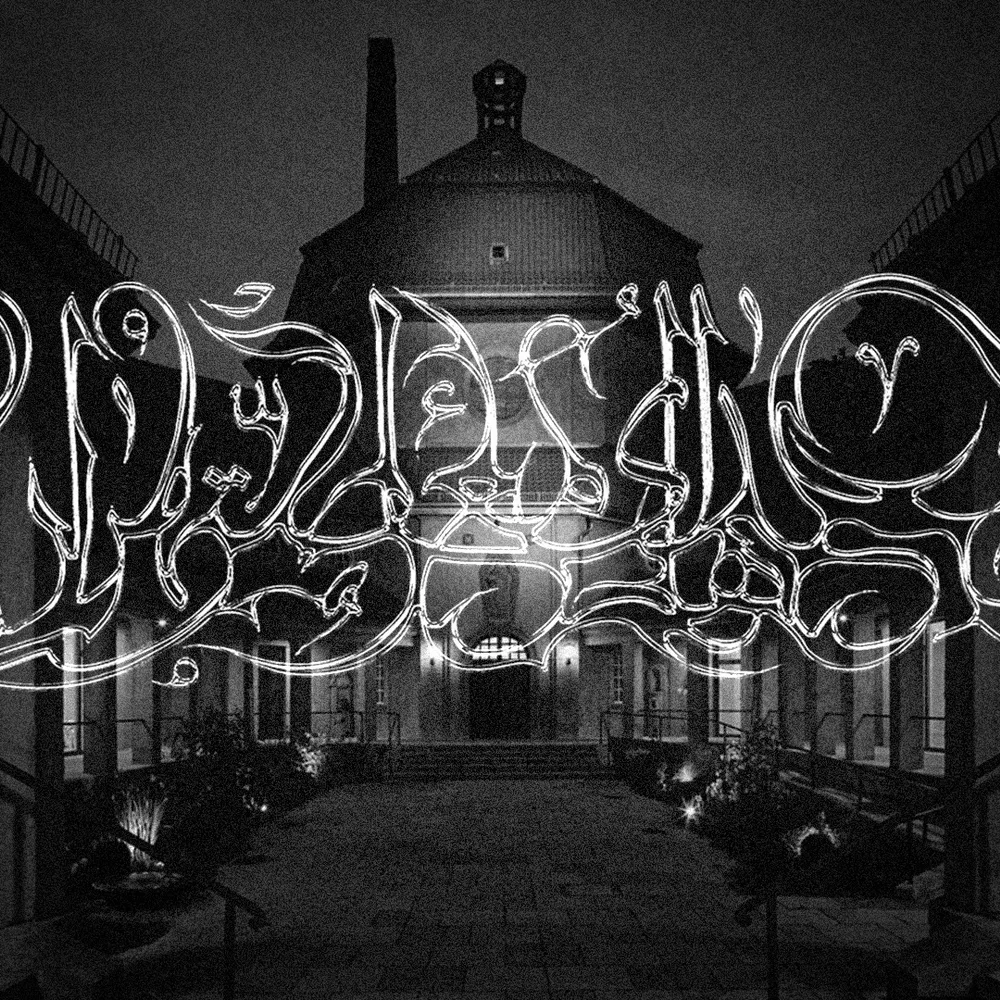

Tehran Contemporary Sounds Festival 2026
Tehran Contemporary Sounds Festival 2026

NO TE PIERDAS NADA
Sigue artistas, sitios y marcas y recibe sus nuevos eventos y contenido
Mapa
Descripción
Tehran Contemporary Sounds 2026
7th Edition · 11–15 November 2026 · Berlin
Tehran Contemporary Sounds returns for its seventh edition from 11–15 November 2026, bringing together experimental music, sound art, cinema, visual art, performance and interdisciplinary practices connected to Iran and its wider transnational contexts.
The festival opens at Moviemento Kino with two evenings of experimental cinema. The first presents selected films by Iranian filmmakers working in Iran. The second is presented in collaboration with Experimental Film Society (EFS) as part of our Cinematic Synesthesia programme, featuring a selection of films by The Intuitive FilmLab, an independent film collective from Lebanon.
From 13–15 November, the festival moves into a three-day mixed-media exhibition bringing together Iranian artists working inside and outside Iran, alongside presentations by independent sound-art collectives and artists based in Iran.
The live programme brings together a wide range of experimental practices, from electronic music, improvisation and sound art to Persian and Finnish instruments, traditional weaving, turntablism, contemporary jazz and audiovisual performance.
Artists include Gnäw, Saba Arat, Nadia Tehran / TEHRAN, Abdullah Miniawy, Iman Jesmi, Herr Spectre, LABOUR, Elshan Ghasimi & Joss Turnbull, Ava Rasti, Shiva Feshareki & Kit Downes, alongside showcases curated with Mosaic, the Berlin-based series for experimental jazz, improvisation and contemporary music.
The seventh edition closes with a panel discussion and the final day of performances, continuing TCS's ongoing exploration of artistic practices that move between disciplines, geographies and cultural contexts.
TCS 2026 brings together artists connected to Iran, its diaspora and wider international experimental scenes, as a diverse field of practices, collaborations and encounters.
------------------Music Program---------------------
Friday 13 November, Doors 19:30
// Iman Jesmi: santur player and sound artist, from Mashhad to Berlin, listening for the memory that migration
leaves in sound.
// Gnäw (Arash Ghasemi & Simo Hakalisto): traditional Persian and Finnish instruments meet esoteric
synthesizers in experimental musical narratives.
// TEHRAN: audiovisual performance of the visual album HUSQVARNA, with dissonant nu-metal guitars
and programmed blast-beats under a voice that moves between screams and tender melodies in Swedish,
English and Farsi.
// Abdullah Miniawy (TCS x Mosaic): solo show by the Egyptian writer, singer, composer and actor, Victoires
du Jazz winner for Le Cri du Caire (2023).
Saturday 14 November, Doors 19:00
// Tezgah (Saba Arat, Karlo Sono & Tarxun): a 45-year-old weaving loom, rebuilt with conductive fibres,
sensors, contact microphones and DIY electronics, becomes a musical instrument.
// Herr Spectre (Hesam Ohadi & Zhina Ardalan): synth-pop and coldwave with distorted guitars and driving
synths, melancholic and cinematic.
// Babak Ahteshamipour: audiovisual live act, presenting his album Violent Violins Exposed in Berlin for
the first time.
// Philipp Gropper, Grischa Lichtenberger, Felix Henkelhausen & Liz Kosack (TCS x Mosaic): a dialogue between
jazz and electronics running since 2019 meets double bass and synthesizers in a new quartet.
// LABOUR, Tehran recursion: video work commissioned by KW Institute for Contemporary Art, followed by
a live set of digital sound synthesis and drums.
Sunday 15 November, Doors 19:00
// Elshan Ghasimi & Joss Turnbull: tar and tombak, with the radīf meeting extended percussion and live
electronics; Ghasimi is the first woman worldwide to lead a large-scale project renewing the radīf.
// Contagious (TCS x Mosaic): Sabine Ercklentz, Andrea Neumann and Mieko Suzuki, with trumpet, inside
piano, mixer, electronics and turntable in constant tension between action and reaction.
// Ava Rasti: ambient and drone, from her album No One Knows How Wild the Wind Blows (130701,
released 30 October).
// Shiva Feshareki & Kit Downes: live improvisation for turntables and Hammond organ, responding to the
architecture and acoustics of the hall.
-------------------Kino Program---------------------
TCS 2026 hosts two film nights at Moviemento Kino: on 10 November, nine short films by independent Iranian filmmakers, and on 11 November, nine short films by filmmakers of Lebanon’s Intuitive FilmLab, as part of Cinematic Synesthesia IV.
Programme One:
Selected short films by Iranian film makers
Golha Hotel - Moosa Ebrahimi - 13 Min
Woyzeck - Arash Khalvati - 6 Min
Before the Moon Shatters in the Eye - Saeid Eliyasi -13 Min
Common Draft - Maryam Katan, Nona Piroozian, Narges Mostafalou - 12 Min
Bougainvillea - Neda Sangtarash - 3 Min
A Tooth in Decay - Raha Faridi - 12 Min
Ermia Heidari - Khajeh - 2 Min
Persephone - Maede Mohsenpour - 5 Min
Sky Debris - Fateme Akbari - 16 Min
Program Two: Cinematic Synesthesia IV — Guilt
For its fourth edition, Cinematic Synesthesia presents Guilt, a series of nine short films produced by The Intuitive FilmLab in Beirut.
The programme
Guilt #1 — Hadeel Al-Kadasi
Guilt #2 — Jawad Jabado
Guilt #3 — Chloe Khoury
Guilt #4 — Maria Ghafary
Guilt #5 — Kareem Nofal
Guilt #6 — Robert Minassian
Guilt #7 — Mohamad Tarek Majzoub
Guilt #8 — Lea Skayem
Guilt #9 — Sarah Claux
-------------------Exhibition Program---------------
TCS Presents: Until Further Notice · تا اطلاع ثانوی
Group exhibition
A state of emergency no longer necessarily constitutes an interruption of the existing order; it has itself become one of the means of sustaining it. Crises accumulate, blurring the boundary between the aftermath of one event and the anticipation of another.
Installations, moving images, experimental sound works and a programme of fixed-media compositions by artists based in Iran and abroad, in relation to the current context of Iran. The exhibition and the works selected here do not aim to speak for Iran. Read together, they show how these conditions reach into collective memory, material experience and perception.
Until Further Notice refers not to a temporary suspension awaiting resolution, but to a present in which the provisional has become an enduring condition of existence.
Mehdi Behboudi, Mehdi Shiri, Mahshid Afzali, Reza Babajani, Leila Momen, Alireza Samadi, Farid Beheshti, Sara Parvaresh & Iliya Shahbazi, Bijan Moosavi, Mina Mohseni. Fixed Media Showcase: Kian Jazayeri, Saba Sabzmeidani, Delaram Moslehi Rad, Taha Hasanlou, Alireza Seyedi, Nava Hemyari, Mina Salehi, Solmaz Pasha-Qelich
13-15 November 2026, daily from 13:00
Free entry until 19:00. From 19:00, entry with the daily pass.
Betonhalle, Silent Green, Berlin
------------------Panel Discussion------------------
Panel 1: Artists in Dark Times
As the Iranian state courts prominent artists and reinvents its own aesthetics, what does an artist owe in dark times?
Bijan Mortazavi, Mohsen Namjoo, Qeysar, Masoud Behnoud and apparently many more to come. The return or the report on return of prominent cultural figures to Iran, some of whom have long been associated with political opposition, has sparked new controversy. These developments unfold in the aftermath of the January massacres, amid an ongoing wave of executions and the realities of war and political repression.
At the same time, the aesthetics of the Islamic Republic itself seem to be shifting. From pink Kalashnikovs to rapping Janfadas, state propaganda appears to be reinventing its visual language, redefining its enemies, and experimenting with new strategies of cultural representation. What might these shifts tell us about the changing relationship between art, power, and political legitimacy?
These developments raise questions that go far beyond the individual decisions of artists. Not only about the right to return, but about what it means when a state that has long restricted, among many things, artistic expression begins to selectively embrace certain artists, aesthetics, and cultural forms? And, perhaps more importantly, what is the responsibility of an artist in what Bertolt Brecht and Hannah Arendt described as “dark times” (finsteren Zeiten)? Taking these controversies as a point of departure, this conversation revisits the relationship between artistic freedom, political responsibility, and complicity. What does it mean to make art under conditions of state violence, war, and massive repression? To what extent can artistic practice be separated from the political circumstances in which it takes place?
Sanaz Azimipour in conversation with Baharan Eghbalzadeh and Nader Talebi
Saturday, 14 November 2026, 17:00-18:30
Betonhalle, Silent Green, Berlin
Free admission
Artistas
9 artistas





Marcas

Eventos Relacionados
Industrial


Tangerine Dream
The Trinity Centre • Inglaterra • Reino Unido
06 feb
Industrial
Tangerine Dream
Saint Luke's & The Winged Ox • Escocia • Reino Unido
04 feb
Industrial
Tangerine Dream
Albert Hall • Inglaterra • Reino Unido
03 feb
Industrial

Zwart+Roest - Edition 1
Sociaal Centrum Onderstroom • Holanda Meridional • Países Bajos
30 ene